The Paris Olympic Cauldron Returns to the Sky: Why Summer 2026 in Paris Just Got More Magical
On June 21, 2026, something extraordinary will happen in Paris.
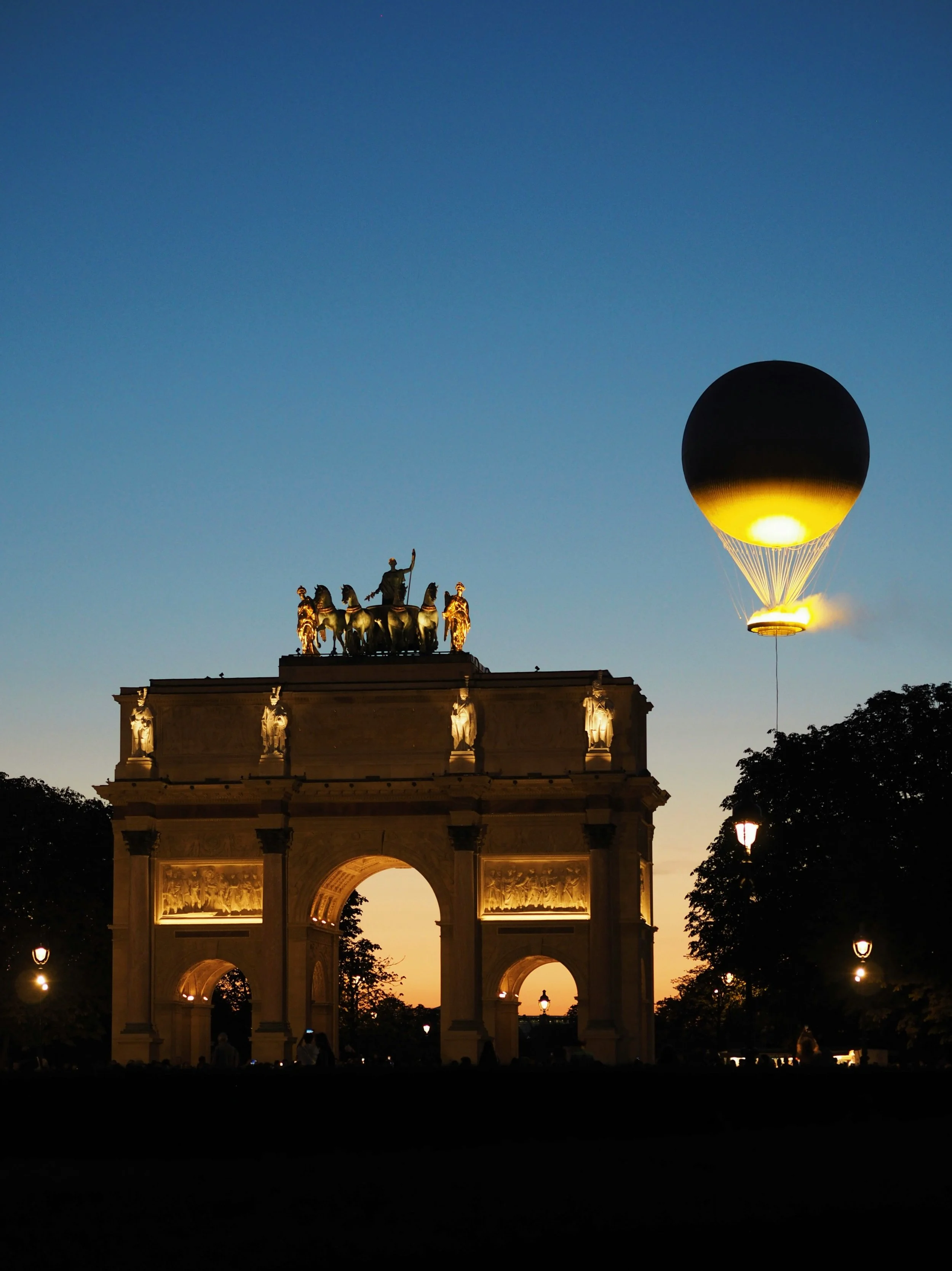
As musicians fill the streets for the Fête de la Musique and the city celebrates the Summer Solstice, the iconic Paris Olympic Cauldron will once again rise into the evening sky above the Tuileries Garden.
For anyone who visited Paris during the Olympic Games of 2024, the sight is unforgettable. Suspended above the historic gardens between the Louvre and Place de la Concorde, the glowing ring appeared to float effortlessly over the city, becoming one of the defining images of the Games. Now, after overwhelming public enthusiasm, the French government has decided that the cauldron's story is not over.
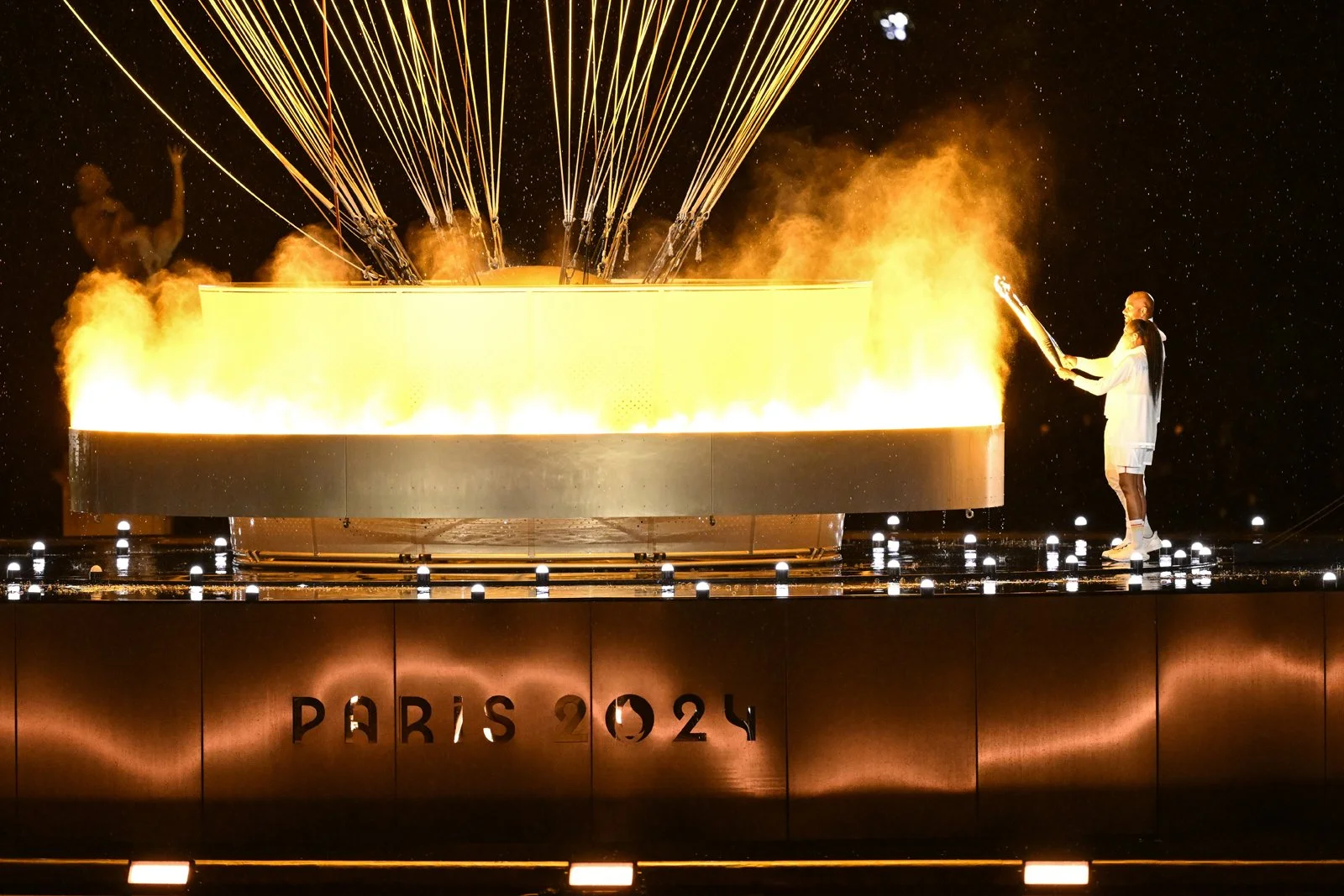
French Olympic champions Marie-José Pérec and Teddy Riner light the Olympic cauldron in the Tuileries Garden (Central Paris) during the opening ceremony of the Paris 2024 Olympic Games. Picture Alliance/Getty Images
The famous balloon will return every summer through 2027, creating a new seasonal ritual in Paris and giving visitors another reason to fall in love with the City of Light.
The Return of a Paris Icon
The cauldron will once again be installed in the Jardin des Tuileries from June 21 through September 14, 2026.
Every evening, weather permitting, it will ascend above the gardens, recreating the magical spectacle that captivated millions during the Olympic Games. The dates are symbolic. June 21 is not only the Summer Solstice, but also France's beloved Fête de la Musique, when free concerts transform Paris into one giant open-air stage. September 14 coincides with the Fête du Sport, extending the Olympic spirit through the entire summer season.
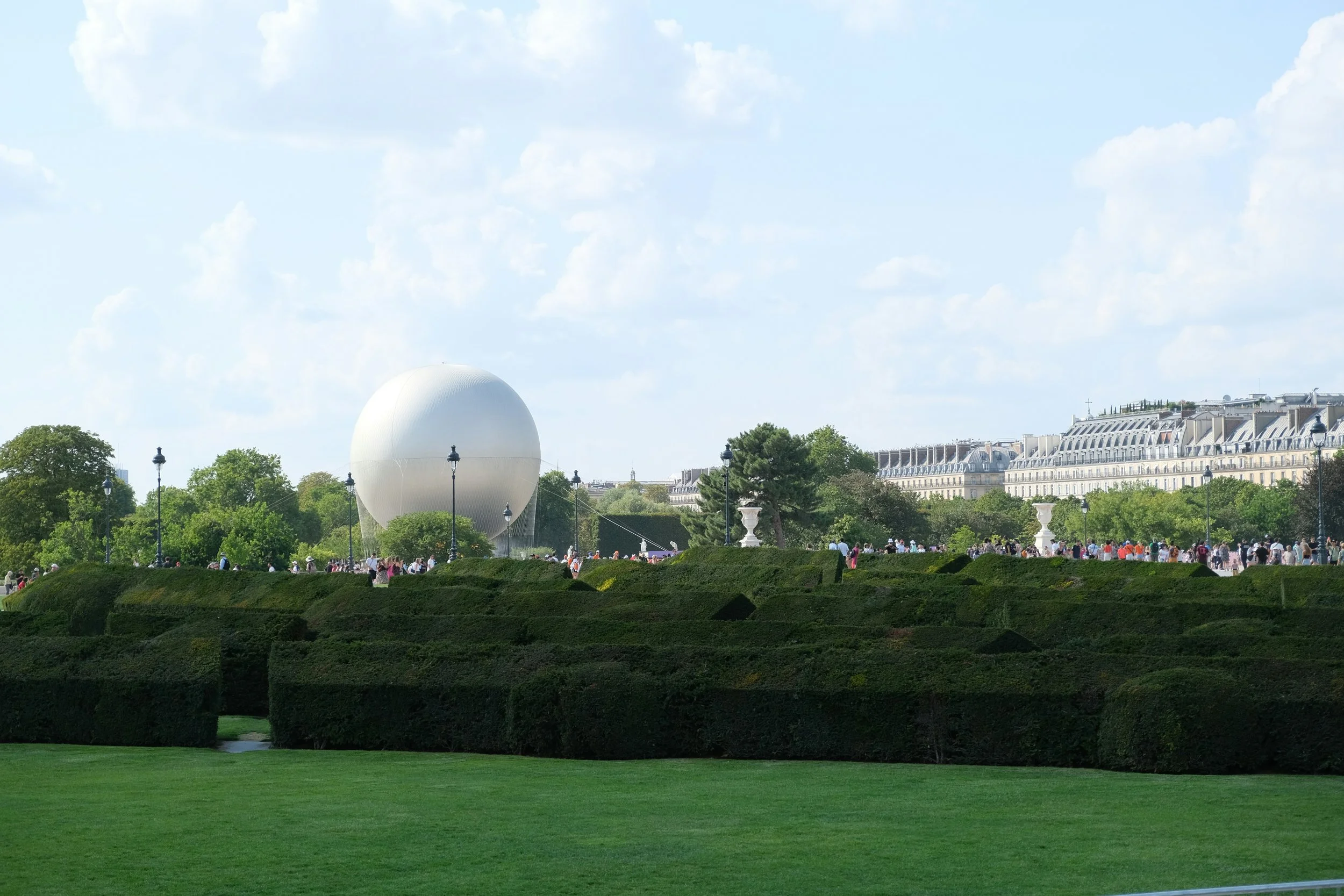
This is no ordinary monument. Unlike the permanent Olympic structures seen in many host cities, Paris has created something living and dynamic. The cauldron appears at dusk, rises into the sky, then disappears again, creating a daily moment of wonder.
French President Emmanuel Macron announced that the cauldron would return each summer until the Los Angeles Olympic Games of 2028, preserving a tangible connection between Paris and the next host city.
A Revolutionary Olympic Flame
One of the most remarkable aspects of the Paris Olympic Cauldron is that it contains no actual flame.
Designed by acclaimed French designer Mathieu Lehanneur, the cauldron creates the illusion of fire through a sophisticated combination of LED lighting, mist, and powerful fans. The result is astonishing: a luminous, flickering cloud that appears to burn without consuming fuel.
The innovation reflected the environmental ambitions of the Paris Games. Rather than relying on fossil fuels, the installation used electricity and water vapor to create one of the most convincing artificial flames ever produced for an Olympic ceremony.
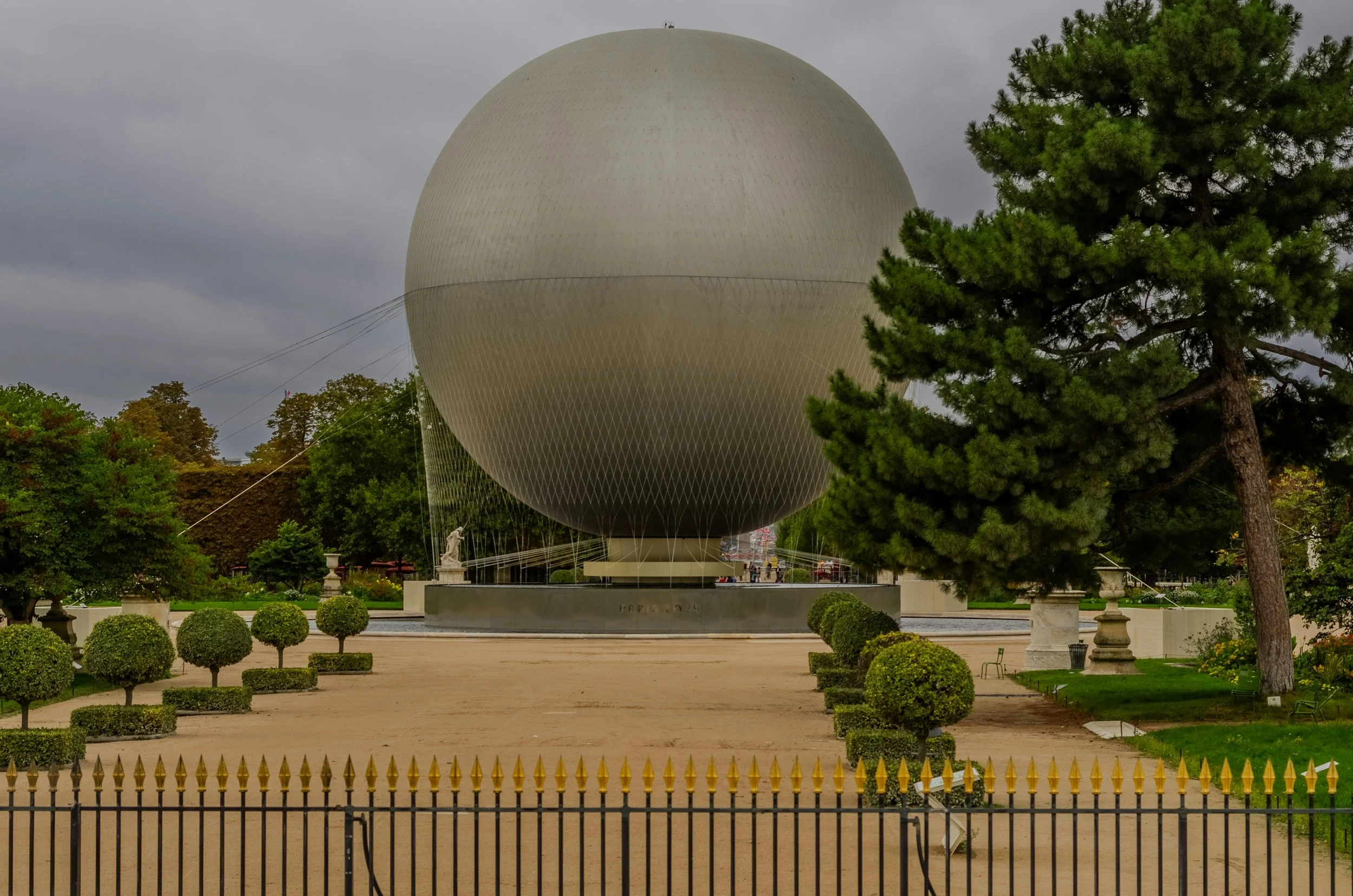
During the Games, crowds gathered nightly to watch the glowing ring rise more than 60 meters (197 feet) above the city. More than a piece of Olympic infrastructure, it became a symbol of Paris itself.
Why the Tuileries Garden Matters
The location was never accidental.
The Tuileries Garden occupies one of the most historic sites in France. Once the grounds of the royal Tuileries Palace, it sits at the heart of Paris's great historical axis stretching from the Louvre through Place de la Concorde to the Arc de Triomphe and beyond.
Yet the choice of the Tuileries carries an even deeper meaning.
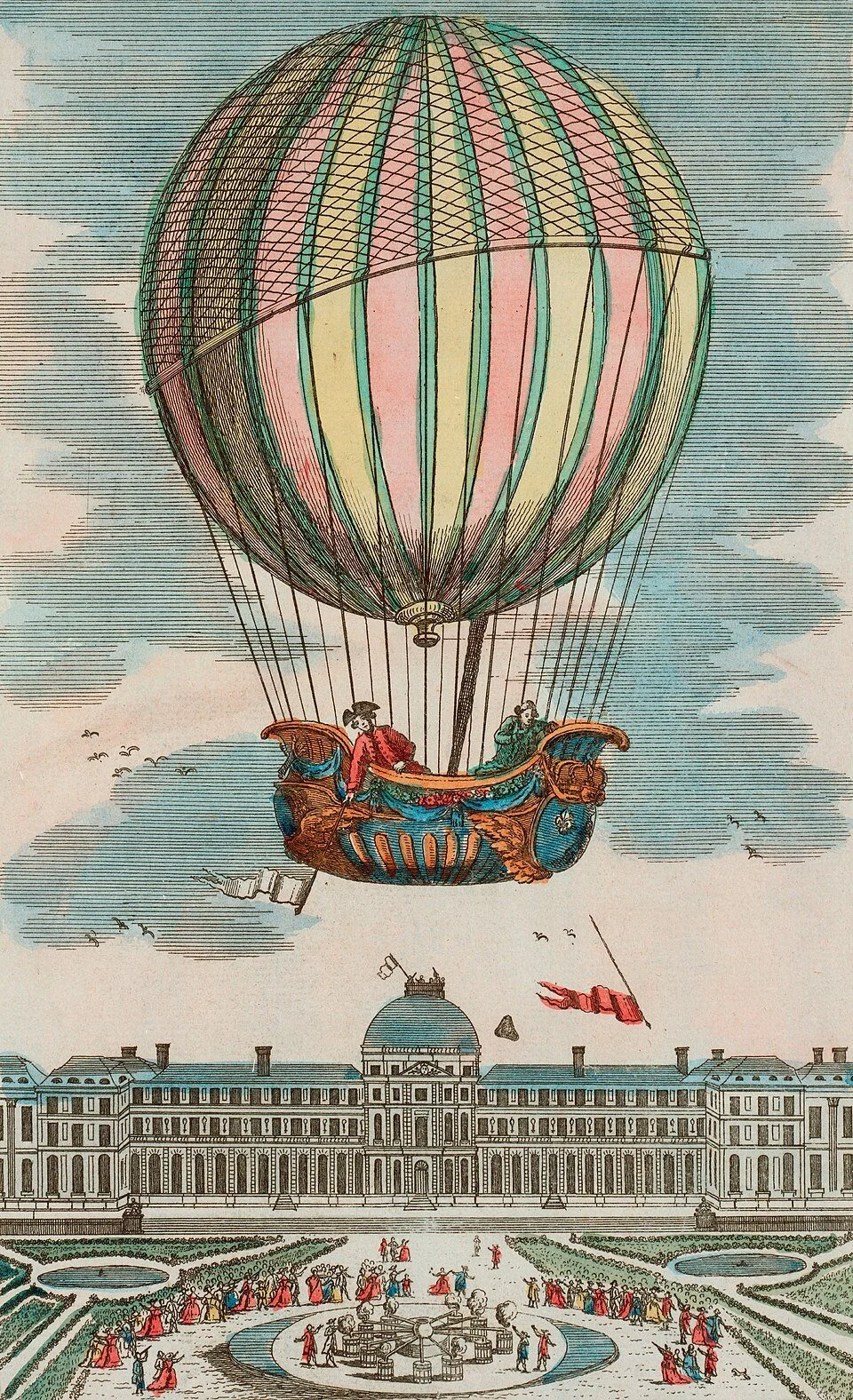
Bon Voyage. Experience of the Aerostatic Globe by Messrs. Charles and Robert at the Tuileries Garden on December 1, 1783
The cauldron was deliberately designed as a tribute to one of the most important moments in aviation history: the first hydrogen balloon flight launched from the Tuileries in 1783.
When modern visitors watch the Olympic balloon ascend above the gardens, they are unknowingly witnessing a recreation of one of the great technological marvels of the Enlightenment.
Paris and the Age of Balloon Mania
Long before airplanes, Paris was obsessed with balloons.
The late eighteenth century witnessed what historians often call "balloonomania." The French public became fascinated with humanity's first attempts at flight. Crowds gathered by the tens of thousands to witness demonstrations, while balloon motifs appeared on clothing, furniture, porcelain, and artwork.
The most famous pioneers were the Montgolfier brothers, whose hot-air balloons stunned Europe.
In November 1783, only months after the first experimental flights, two men made the first free manned balloon flight above Paris. The event transformed the city into the center of aviation innovation and established France's reputation as a pioneer of flight.
For Parisians, the sight of a balloon rising into the sky represented more than technology. It symbolized progress, imagination, and the possibility of transcending earthly limits.
More than two centuries later, the Olympic Cauldron taps into that same emotional response.
The Forgotten Balloon History of Versailles
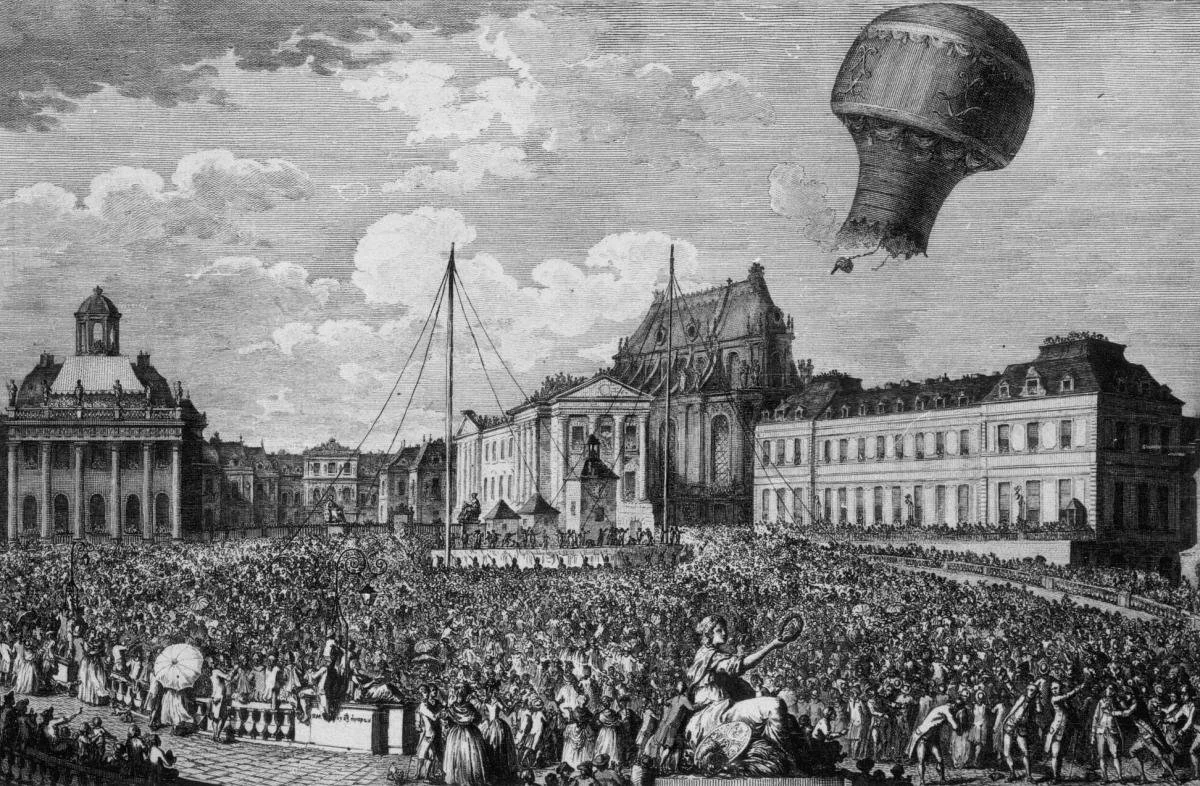
The first 'aerostatic' flight in history was an experiment carried out by the Montgolfier brothers at Versailles in 1783
Many visitors know the balloon story of Paris but few realize that Versailles also played an important role in the history of flight.
On September 19, 1783, before the first human passengers took to the air, a Montgolfier balloon was demonstrated before King Louis XVI and Queen Marie Antoinette in the courtyards of the Palace of Versailles.
Because the risks of flight were still unknown, the first passengers were not people but animals. A sheep, a duck, and a rooster were placed in a basket beneath the balloon.
The flight was a success.
The balloon rose over Versailles and landed safely, proving that living creatures could survive aerial travel. The experiment paved the way for the first manned flights that followed only weeks later.
The sheep became something of an eighteenth-century celebrity, and the demonstration helped convince the royal court that human flight was possible.
Today, when the Olympic Cauldron rises above Paris, it evokes not only Olympic memories but also this remarkable chapter of French scientific history.
Why the Cauldron Captured the World's Imagination
Paris has never lacked monuments.
Visitors can choose between the Eiffel Tower, Notre-Dame, the Louvre, Montmartre, and dozens of other iconic landmarks.
Yet during the summer of 2024, many travelers found themselves talking most about a glowing balloon.
Why?
Partly because the cauldron represented something increasingly rare: a shared public experience.
Every evening people stopped what they were doing and looked upward together. Families, tourists, Parisians, photographers, and Olympic fans all gathered around the Tuileries to witness the same fleeting spectacle.
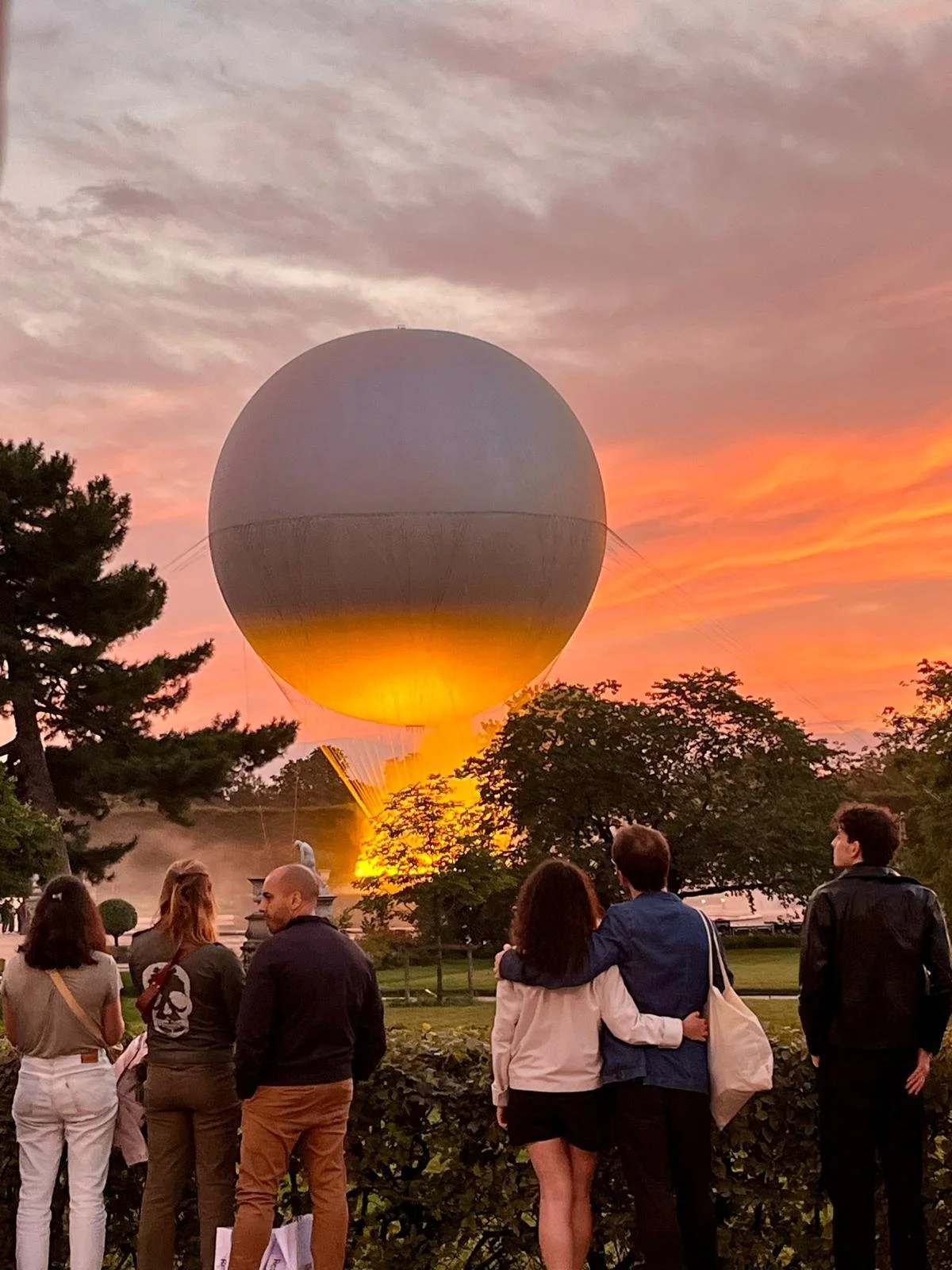
Unlike a building that remains unchanged, the cauldron created anticipation. You had to be there.
It was temporary.
It was theatrical.
And because it appeared at sunset, it became intertwined with some of the most beautiful moments of a Parisian summer evening.
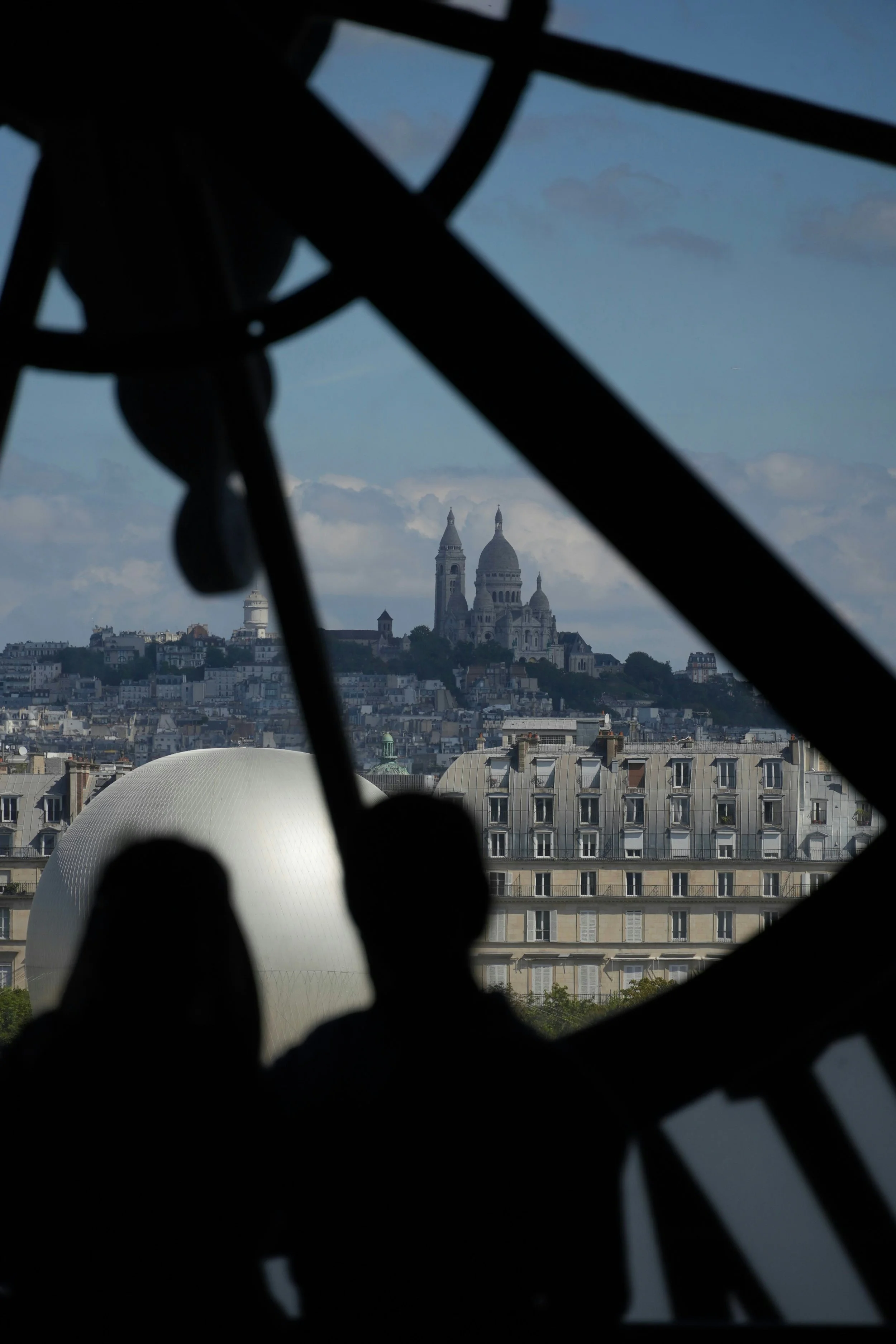
The Perfect Date: June 21
There may be no better day for the cauldron's return than June 21.
The Summer Solstice marks the longest day of the year, a celebration of light that has been observed across Europe for centuries.
In France, it is also the Fête de la Musique, created in 1982 by the French Ministry of Culture. Every year, professional musicians and amateurs alike perform free concerts in streets, squares, cafés, gardens, and public spaces throughout the country.
On this one evening, Paris becomes a giant stage.
The return of the cauldron on the same date creates a powerful combination of music, light, history, and celebration. It transforms the launch into far more than a technical event. It becomes a citywide festival.
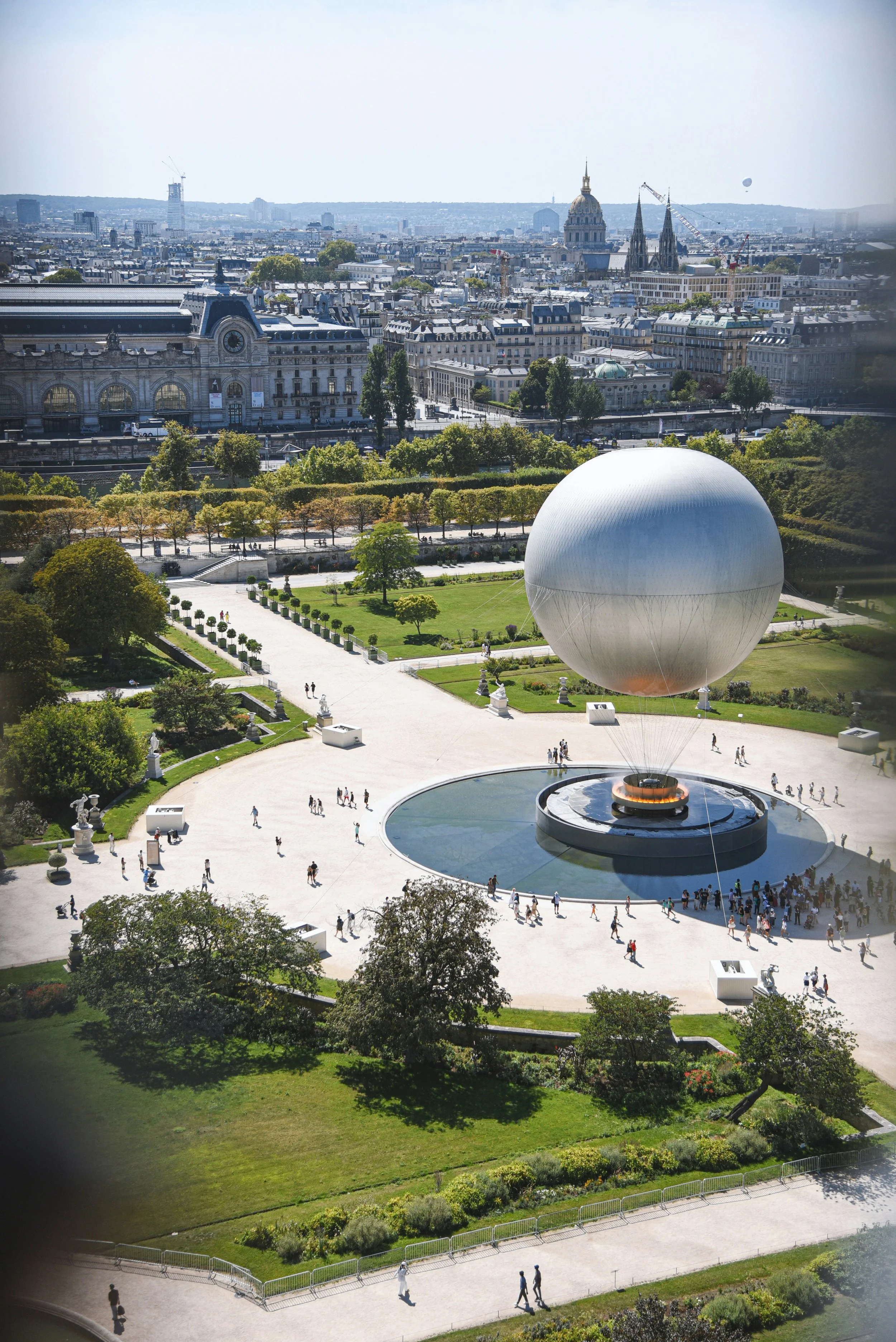
Where to See the Cauldron
The obvious place is the Tuileries Garden itself, where visitors can stand near the large central basin and watch the ascent.
However, some of the most spectacular views come from elsewhere in the city.
The Place du Carrousel near the Louvre offers close-up views.
The quays along the Seine provide beautiful perspectives as the balloon rises above the rooftops.
Sections of the Champs-Élysées and Rue de Rivoli create dramatic sightlines that frame the cauldron against Paris's historic architecture.
Photographers will find sunset particularly rewarding, when the glowing ring appears against a sky shifting from gold to deep blue.
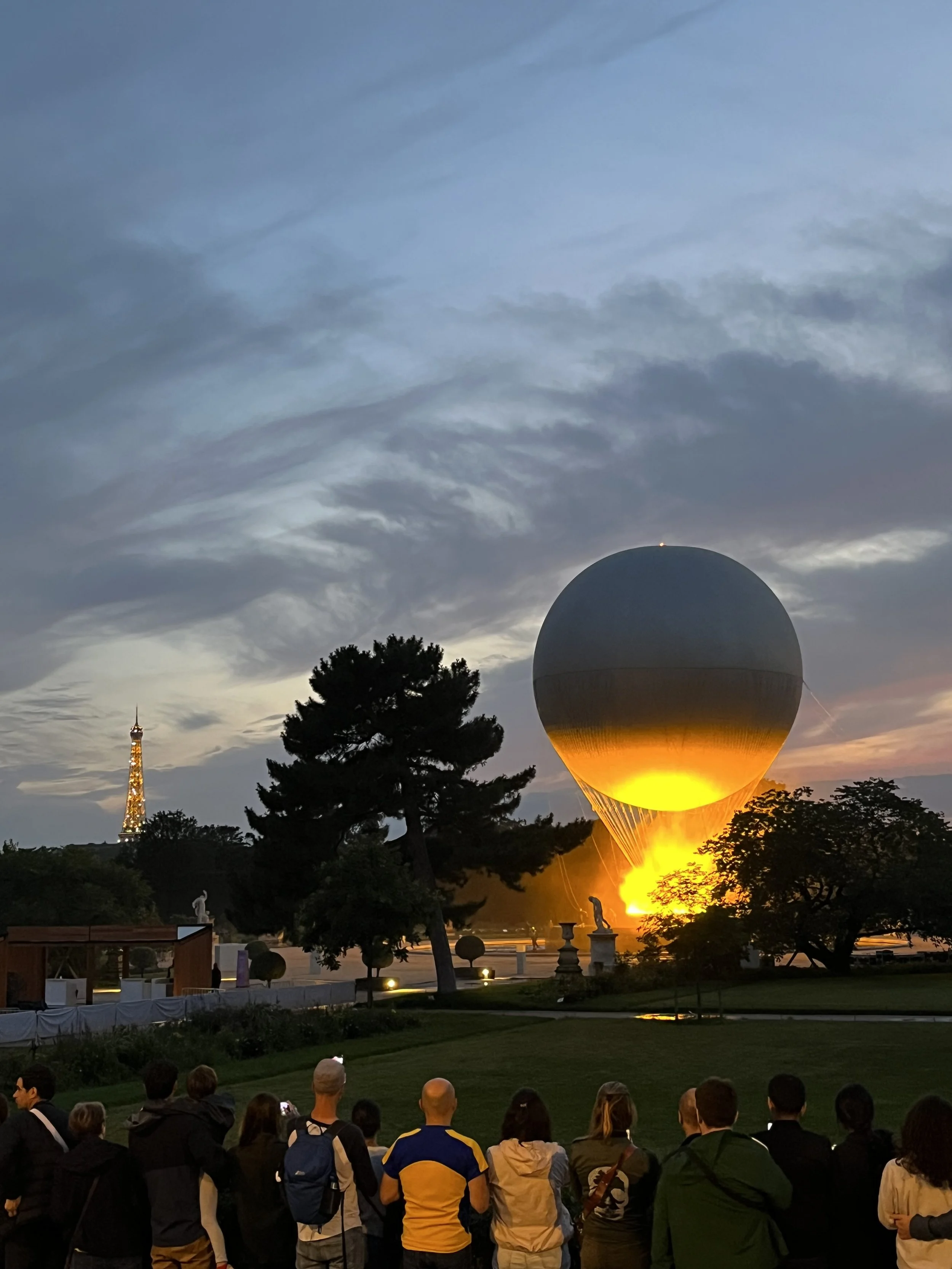
A New Paris Tradition
The greatest monuments are not always the oldest.
Sometimes they are the ones that capture the spirit of a particular moment.
The Paris Olympic Cauldron was born during the excitement of the 2024 Games, but it has evolved into something larger. It now belongs not only to Olympic history but to Paris itself.
Its annual return links eighteenth-century balloon pioneers, the grandeur of the Tuileries, the celebration of the Summer Solstice, and the legacy of the Paris Olympics.
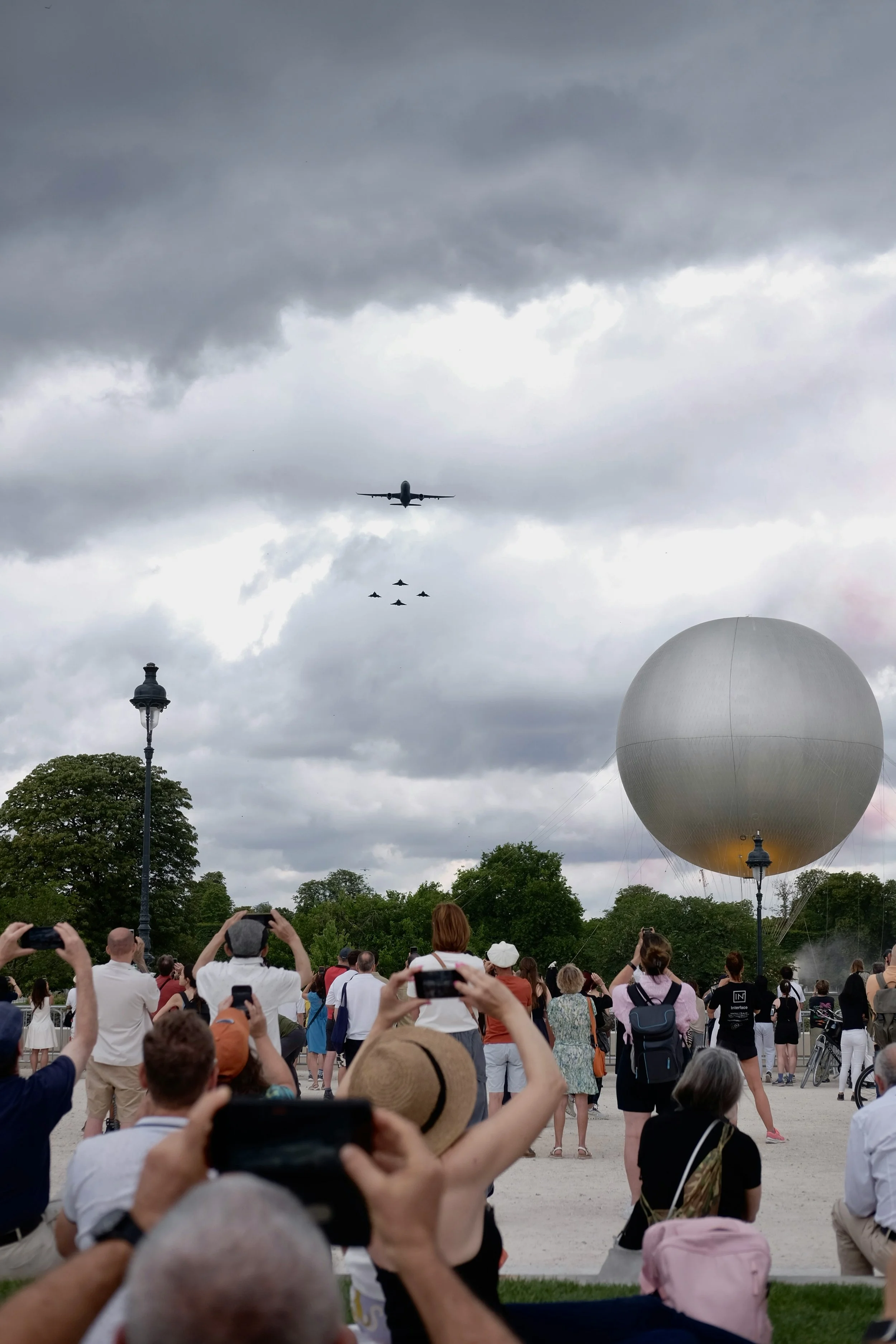
For visitors planning a trip to Paris this summer, it offers a rare opportunity: the chance to witness a brand-new tradition in one of the world's oldest and most beautiful cities.
And as the glowing ring rises once more above the Tuileries on June 21, it will remind us of something Parisians have always understood.
The sky above Paris has always been a place for dreams.